
Cary, NC -- United Way of North Carolina’s (UWNC) senior leadership joined peers from across the country April 27–29 in the Greater Washington, DC area for United Way's Advocacy Forum and Capitol Hill Day. The annual gathering is designed to strengthen the network’s collective voice in public policy. This year’s event focused on navigating a rapidly shifting policy landscape, deepening relationships with federal partners, and elevating the role of advocacy in driving community impact.
.jpg)
Brittany Pruitt Fletcher (UWNC) speaking on scaling advocacy impact as a member of a state coalition.
A National Platform for Policy, Partnership, and Impact
The Advocacy Forum brought together local United Way staff, board members, 211 leaders, Women United members, and partners for three days of policy briefings, advocacy training, and peer-to-peer learning. Programming emphasized strategies for building durable relationships with policymakers, crafting effective advocacy plans, and aligning public policy with community needs.
Attendees gained insights into federal, state, and local revenue strategies; emerging policy issues affecting communities nationwide; and practical techniques for engaging elected officials. The forum also offered extensive opportunities for networking and sharing best practices with colleagues from across the United Way network.
The event culminated in Capitol Hill Day, where participants met directly with congressional offices to discuss United Way priorities and highlight the essential role of 211 in connecting individuals and families all across the US to critical resources.
United Way of North Carolina Elevates the Case for Expanding 211
During Capitol Hill Day, United Way of North Carolina senior leaders held strategic conversations with legislative aides from the offices of Senator Ted Budd, Senator Thom Tillis, and Representative Deborah Ross. These discussions centered on the growing national importance of NC 211, the statewide information and referral system that connects North Carolinians to health and human services.
NC 211 has become a trusted, data-informed resource for navigating needs such as housing, food access, disaster recovery, mental health support, and more. United Way of North Carolina leaders emphasized how the system’s infrastructure, technology, and community partnerships could serve as a model for strengthening 211 networks across the country.
.jpg)
United Way executives pose with the Legislative Aids of Senator Tedd Budd.
Key themes from the conversations included:
- Scalability of the NC 211 model and its potential to support national efforts to improve access to social services
- The value of 211 data in helping policymakers understand real-time community needs
- Opportunities for federal investment to modernize and expand 211 systems nationwide
- The importance of cross-sector partnerships in ensuring 211 remains a reliable, accessible resource during crises and everyday challenges
By highlighting both the operational strengths and community impact of NC 211, United Way of North Carolina reinforced the message that a stronger national 211 network would benefit individuals, families, and policymakers alike.
Strengthening Advocacy Across the United Way Network
The Advocacy Forum underscored that effective advocacy is not limited to seasoned policy professionals. Programming was intentionally designed to support both experienced advocates and those new to policy engagement. Participants left with a clearer understanding of how to:
- Craft advocacy strategies that drive mission impact and optimize resources
- Build and sustain relationships with policymakers
- Engage partners and community members in advancing shared priorities
- Leverage policy to strengthen programs and expand community reach
For United Way of North Carolina, the event reaffirmed the importance of elevating the voice of local communities in federal policy conversations—and the power of collaboration across the United Way network.
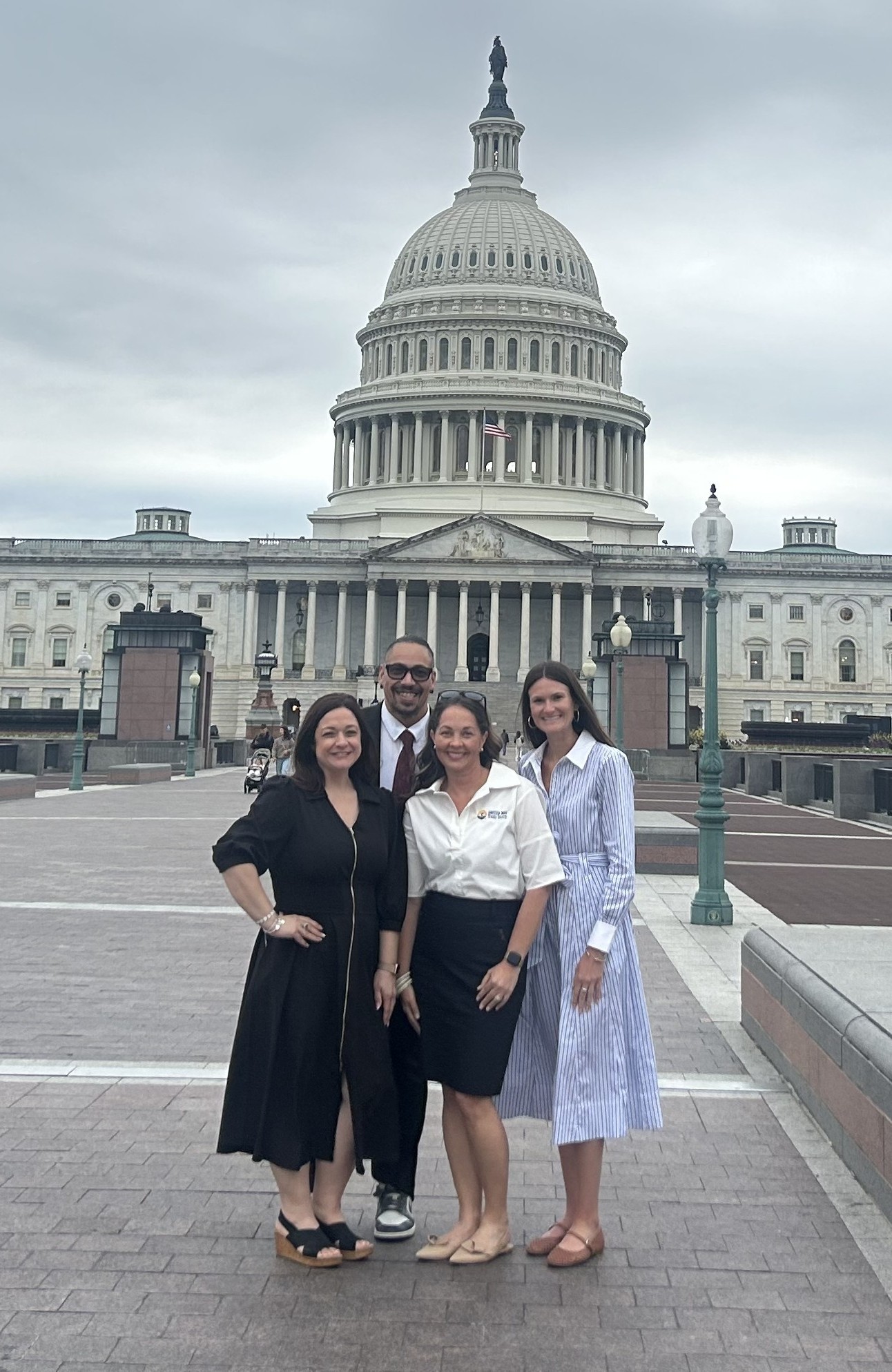
Brittany Pruitt Fletcher (UWNC), David Mercado (UWNC), Carla Poplin (United Way of Stanly County), and Sally Gordon (UWNC) take a break between advocacy sessions to admire our nation's capitol building.
Looking Ahead
As United Way organizations continue to address complex community challenges, advocacy remains a critical tool for driving systemic change. United Way of North Carolina’s engagement on Capitol Hill reflects a commitment to ensuring that every community has access to strong, responsive 211 services, and that policymakers understand the essential role these systems play in supporting residents.
The conversations with congressional offices marked an important step in advancing the vision of a more connected, more resilient national 211 network.
#####
About United Way of North Carolina
United Way mobilizes communities to action so all can thrive. For almost 50 years, United Way of North Carolina (UWNC) has been a statewide organization, partnering with 47 local United Ways to co-create solutions to people’s most pressing challenges. We take a comprehensive approach, listening and responding to statewide needs, including but not limited to, strengthening local resilience and advancing health, youth opportunity, and financial security in our state. UWNC bridges and mobilizes people, local United Ways, and resources so individuals, families, and communities thrive in North Carolina. We are committed to four core areas of work: Member services, NC 211, Disaster Response, and Advocacy.
About NC 211
NC 211 is an information and referral service provided by United Way of North Carolina and powered by local United Ways of North Carolina. Families and individuals can call 2-1-1 or 1-888-892-1162 to receive free and confidential information on health and human services within their community.